
Augusto Gonzalez is the President of Young European Leadership (YEL) and simultaneously serves as the European Union Chair for the G7 & G20 youth processes. He is also the Head Delegate of the Kingdom of the Spain to the G20 Youth 2026. He has a background in international relations and foreign policy, having worked and lived in six different countries on four different continents. He holds an M.Sc. in Global Development from the University of Copenhagen and a B.A. in International Relations from UC Berkeley. He has been directly involved in G7 and G20 initiatives since 2018, having worked with G20 governments and on politically linked projects across the US, Argentina, Europe, and South Asia.
The Changing Tide of Global Governance
In an era defined by geopolitical fragmentation, economic uncertainty, and the urgent need for coordinated global governance, the Group of Twenty (G20) must evolve to reflect the realities of the modern world. As the premier forum for international economic cooperation, its legitimacy and effectiveness depend on its ability to represent the actors that meaningfully shape global outcomes. It is increasingly clear that Spain’s continued exclusion as a full member is an anachronism that weakens the institution at a time when unity and representation are paramount.
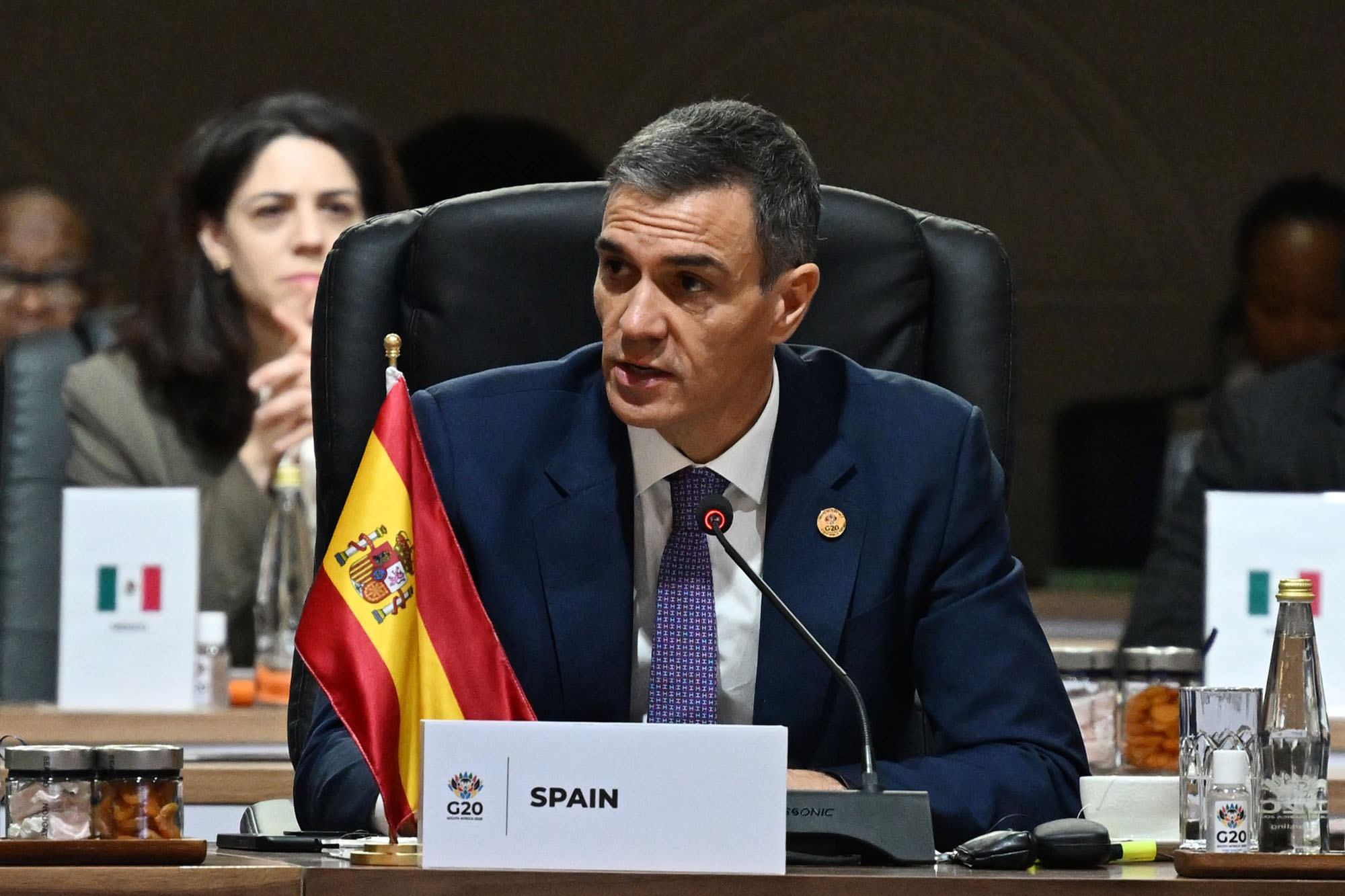
Spain is not a peripheral actor in global affairs. It is the world’s twelfth largest economy, and the largest economy without a permanent G20 seat. Furthermore, Spain is a key player in transatlantic relations, a bridge between Europe and Latin America, and an increasingly relevant voice in Mediterranean and African affairs. Despite this, Spain remains a “permanent guest” in the G20—invited to every summit, contributing to discussions, yet denied a formal seat at the table; the only country in the world to hold such status. This halfway measure reflects neither Spain’s economic weight nor its diplomatic relevance in 2026.
A Question of Legitimacy and Representation
The G20 was conceived as a pragmatic response to global economic crises, expanding beyond the G7 to include emerging powers whose participation was essential to stabilizing the global economy. However, its membership has remained largely static, even as the global balance of power has shifted. This rigidity undermines the forum’s credibility.
Spain’s full inclusion would strengthen the G20’s claim to legitimacy. Its economy is larger than that of several current members and its influence within the European Union is substantial. While the EU itself is represented as a bloc, this does not negate the importance of including key member states whose economic size and political influence justify independent representation. After all, multiple European countries already sit at the table individually. The continued exclusion of Spain raises difficult questions about consistency and fairness in the G20’s composition.
Strengthening Europe’s Voice in Global Governance
At a time when Europe is striving to assert itself in an increasingly multipolar world, Spain’s membership would enhance the continent’s ability to contribute meaningfully to global governance. Spain brings a distinct perspective shaped by its historical, linguistic, and economic ties to Latin America; an often underrepresented region in global decision-making fora. In this sense, Spain’s inclusion would not merely add another European voice; it would broaden the diversity of perspectives within the G20.
Moreover, Spain has demonstrated a consistent commitment to multilateralism, international cooperation, and the rules-based global order. These are precisely the values that the G20 must uphold if it is to remain relevant in addressing challenges such as climate change, debt sustainability, and global inequality. Spain’s track record makes it a natural ally in strengthening the institution’s normative foundations an a voice and advocate for those in the Global South looking to the Global North for leadership.
A Necessary Evolution
The argument for Spain’s inclusion is not theoretical, it is already deeply embedded in practice. Spain participates in G20 summits, contributes to working groups, and aligns itself with the forum’s objectives. The only thing missing is formal recognition. Transitioning Spain from a permanent guest to a full member would be a logical and low-cost reform that yields significant benefits in terms of coherence and inclusivity. While many argue that expanding membership risks making the G20 less efficient. Yet this concern overlooks the fact that Spain is already part of the process in all but name. Formalizing its role would not complicate negotiations; rather, it would clarify them by aligning institutional reality with operational practice.
At a moment when international cooperation is both more difficult and more necessary than ever, the G20 must strive to be more representative, more inclusive, and more reflective of contemporary realities. Accepting Spain as a full member is not merely a symbolic gesture. It is a practical step toward strengthening one of the world’s most important forums for economic coordination. The question is no longer whether Spain belongs in the G20. In practice, it already does. The question is how much longer the institution can afford to pretend otherwise.
